The 400-Door Problem: Why Property Management Ops Break Before They Scale
Property management doesn't fail at 40 doors or at 4,000. It fails around 400, where work volume outgrows the team but can't justify senior hires.
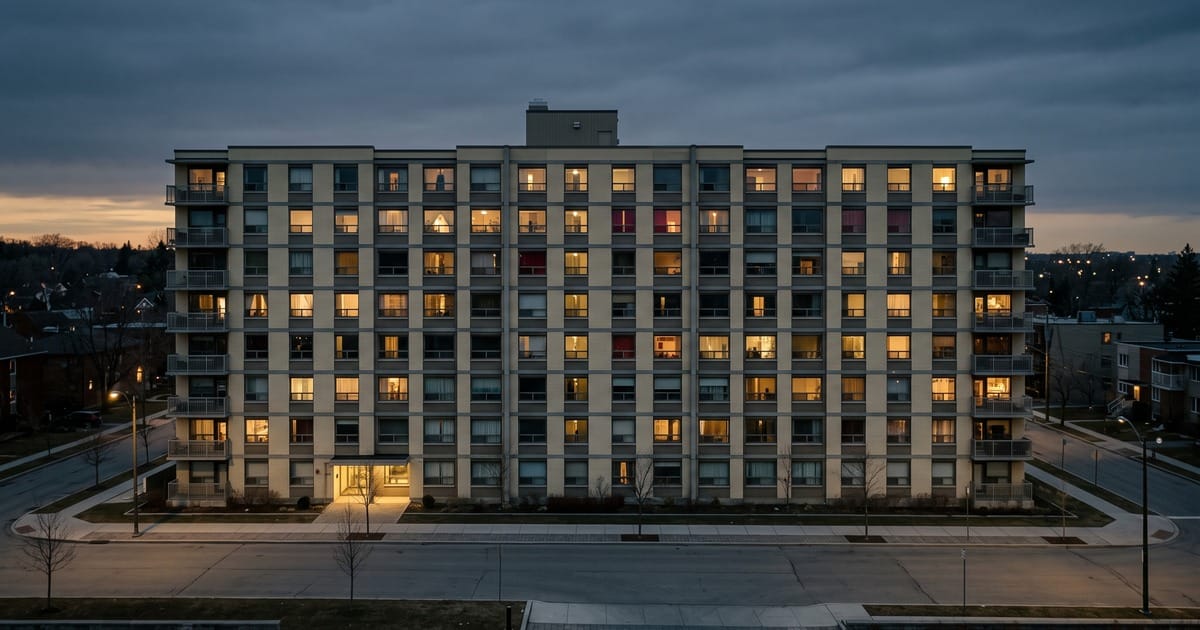
Property management portfolios don't break at forty doors. At forty, one competent manager holds the whole thing in their head — who pays late, which boiler is on borrowed time, which tenant calls twice about everything. They don't break at four thousand either. At four thousand you have a real ops function: regional managers, a maintenance coordinator, an AP clerk, someone whose actual job is renewals.
They break somewhere around four hundred.
Four hundred doors produces enough work to overwhelm a small team and not enough margin to hire the people who would fix it. The volume is industrial. The staffing is still artisanal. Every operator who has crossed this threshold recognises the symptom: nothing is on fire, and nothing is under control.
What 400 doors actually generates
Strip the portfolio down to its work streams and the arithmetic gets uncomfortable.
Maintenance requests arrive at roughly 1.5 to 2 per unit per year in stabilised residential stock — call it 600 to 800 tickets, each needing intake, triage, vendor assignment, scheduling, tenant communication, completion verification, and invoice matching. That's not 700 tasks. It's closer to 4,000 discrete actions.
Rent collection produces a monthly cycle of posting, reconciliation, exception chasing, and delinquency follow-up. Renewals arrive on a rolling basis — thirty-odd expiries a month, each with a market check, an offer, a negotiation, and a document. Vendor invoices need coding against the right property and GL line. Owner statements go out monthly and generate questions. Compliance calendars run on their own clock: inspections, certificates, licence renewals, insurance evidence.
None of this is difficult work. All of it is unforgiving work. A missed inspection certificate is a fine. A mis-coded invoice is a wrong owner statement. An unanswered maintenance ticket is a bad review, then a non-renewal, then a vacancy — the single most expensive event in the portfolio.
Why the hiring answer doesn't arrive
The obvious response is to hire an operations manager. Someone senior enough to own the exception queue, coach the coordinators, and keep the compliance calendar honest.
The obvious response takes three to six months to fill and another two to four to ramp. A capable mid-level ops hire in this space runs somewhere in the $90,000 to $160,000 range fully loaded once you count benefits, tooling, management overhead, and the cost of the search itself. Against a 400-door portfolio's management fee revenue, that is a real bite — and it's a bite you take on faith, months before the person is productive.
So most operators do something else. They spread the work across the people they already have. The property manager starts coding invoices. The leasing agent picks up maintenance triage. The owner picks up the compliance calendar because nobody else will. Everyone's job quietly becomes a worse version of itself, and the senior judgement you actually needed — the escalation call, the vendor renegotiation, the difficult owner conversation — gets squeezed into the margins of a day filled with data entry.
That's the 400-door problem. Not a shortage of hours. A misallocation of judgement.
Splitting the work along the right seam
The useful move is not to hire faster. It's to notice that these work streams have two very different halves, and to stop paying senior rates for the wrong one.
Take maintenance. Intake, categorisation, vendor dispatch against a standing rule set, appointment confirmation, tenant status updates, completion follow-up, invoice matching against the work order — this is structured, high-volume, rules-driven throughput. It runs the same way on ticket 700 as on ticket 7. It benefits enormously from operating at all hours, because tenants do not report leaks during business hours.
Then there's the other half. A vendor quote that has drifted 40% above the historical range for that job. A tenant complaint that reads like the front end of a habitability claim. A recurring fault in one building that suggests a capital problem rather than a repair problem. An owner who wants to defer maintenance that the compliance calendar says cannot be deferred. These are judgement calls with money and liability attached, and they need a senior practitioner who has seen the pattern before and will put their name on the decision.
Same seam runs through every other stream. Rent posting and reconciliation are throughput; a payment-plan decision on a long-tenured resident is judgement. Renewal document assembly is throughput; pricing a renewal against a softening submarket is judgement. Invoice coding is throughput; approving a variance is judgement.
What that looks like in practice
This is the model h.work is built around: named AI Specialists that own the throughput half of a role, deployed into the channels a portfolio already runs on — email, Slack, Teams, WhatsApp, the property management system — with credentialed human experts holding the judgement half.
A Property Operations Coordinator Specialist works the maintenance queue end to end: intake from whatever channel the tenant used, triage against your rules, vendor dispatch, scheduling, tenant updates, completion verification, invoice matching. It works overnight and at weekends. It doesn't lose a ticket because it was busy showing a unit.
What it doesn't do is decide alone on anything consequential. Consequential decisions route to a senior expert for review before execution — someone identity-verified and credentialed through Humanity, with real property operations experience behind the call. Routine work is monitored continuously rather than spot-checked, and every expert correction becomes ground truth that improves the Specialist's next thousand tickets.
The economics work because supervision is leveraged. One consortium expert can oversee Specialists serving ten to thirty portfolios, which is why senior judgement becomes affordable at 400 doors when a dedicated senior hire is not. Manager-tier Specialists sit in the $3,000 to $6,000 per month band — roughly 20 to 40% of the fully loaded hire you were weighing — on a monthly contract, cancellable on thirty days' notice, with the first month running as a paid trial. Deployment is measured in a day, not a quarter.
The test to run this week
Pull last month's maintenance log and the last two owner statements. For every action taken, mark it T or J: throughput or judgement.
Then look at who did the T's. If the answer is your most experienced people — the ones you hired for their judgement, whose actual value is the escalation call and the owner relationship — you've found the problem. You are not understaffed. You are paying senior rates for clerical throughput and getting clerical attention on the decisions that matter.
Four hundred doors doesn't need a bigger team. It needs the work split along the seam it already has.
Slug: 400-door-problem-property-management-ops
Meta description: Property management doesn't fail at 40 doors or at 4,000. It fails around 400, where work volume outgrows the team but can't justify senior hires. Here's the fix.