Why It Now Takes 5 Job Ads to Make One Hire
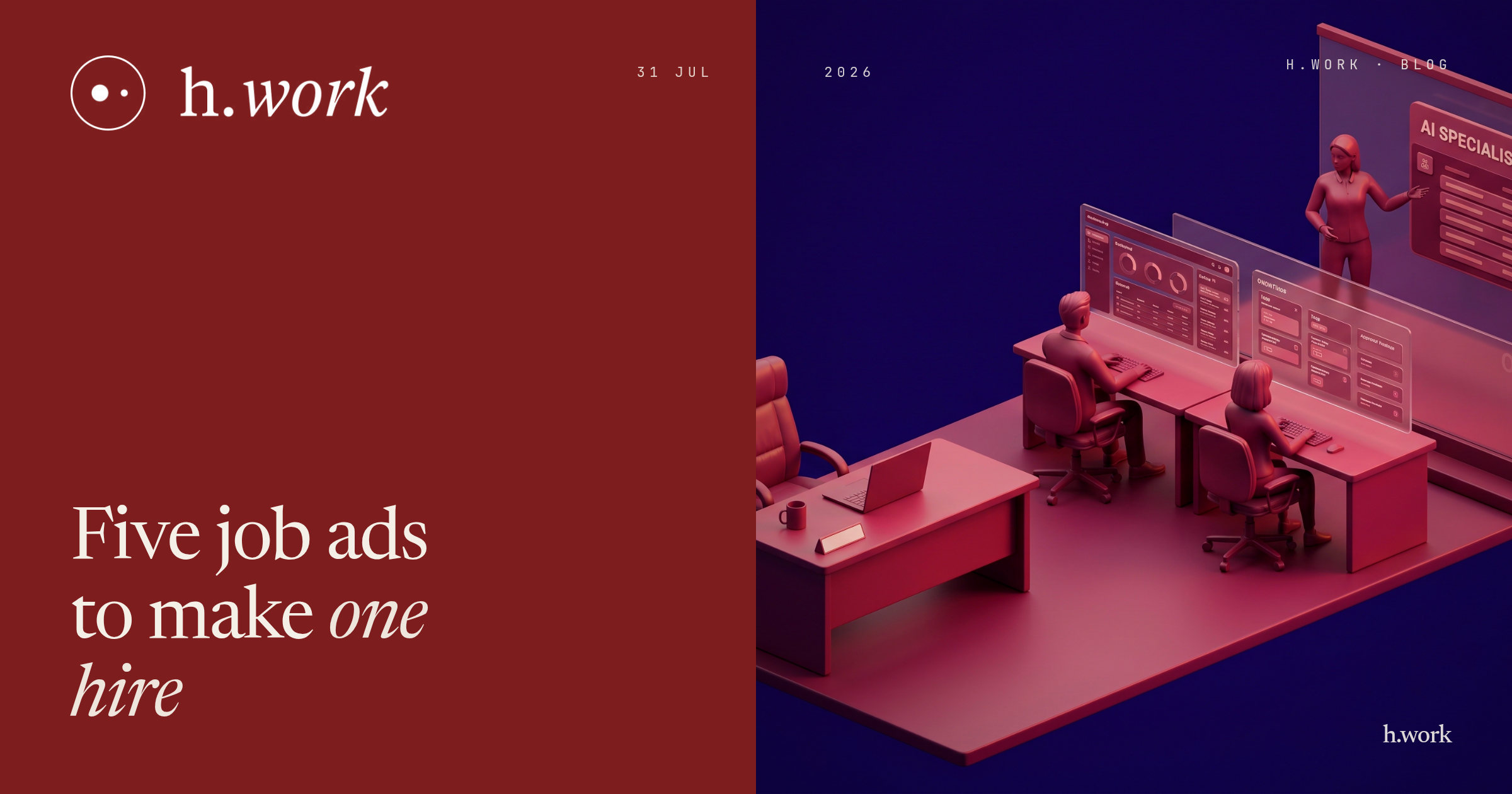
For most of the last two decades, the ratio of job postings to hires hovered near or below 1. Post a role, fill a role. That relationship has broken. According to Revelio Labs' new AI Labor Market Tracker, the job-postings-to-hire ratio has surged past 5 — employers are now running an average of five job ads for every successful hire.
This isn't a story about fewer jobs. Companies that have adopted AI are actually growing headcount roughly 27% faster than those that haven't. It's a story about friction: hiring has gotten harder to do well, even as it's picking up pace.
The job hasn't stopped moving
The likely driver is something Revelio calls the "activity dissimilarity index" — a measure of how much the actual mix of tasks inside jobs has changed year over year. In June 2026, that index hit 8.4 percentage points, meaning roughly 8.4% of the workforce's task mix would need to be reallocated just to match what the same jobs looked like twelve months earlier.
Roles are shifting under people's feet faster than job descriptions can track them. A "marketing coordinator" posted in January and a "marketing coordinator" posted in June may not be describing the same job anymore — AI has quietly absorbed some tasks, added others, and changed what "good" looks like in the role.
Why five ads, not one
When the role itself is a moving target, job postings become guesswork. Hiring managers write descriptions based on the last version of the job they remember, not the version that actually exists now. Candidates apply against a description that's already stale by the time they interview. Mismatches pile up — not because the talent pool is thin, but because the target kept moving after the ad went live.
That's expensive. Every unsuccessful posting cycle costs sourcing time, interview hours, and a widening gap between "role we need" and "role we're advertising."
What good hiring teams are doing differently
The fix isn't better job-ad copy. It's decoupling the hiring process from static titles and pedigree, and rebuilding it around the actual work.
- Describe outcomes and tasks, not titles. What will this person be doing in 90 days — not what their business card will say.
- Screen for adaptability over resume-matching. If the role is going to keep reshaping itself, the strongest signal is how fast someone absorbs a moving target, not how closely their last job title matches yours.
- Shorten the postings-to-hire cycle deliberately. Treat a role that isn't filling after one or two postings as a signal the job description is wrong, not the candidate pool.
The takeaway
The five-ads-per-hire number isn't a talent shortage. It's a description problem — companies advertising jobs that have already changed shape by the time anyone applies. The employers closing that gap fastest aren't writing punchier job ads. They're building hiring processes precise enough to keep up with roles that don't sit still.